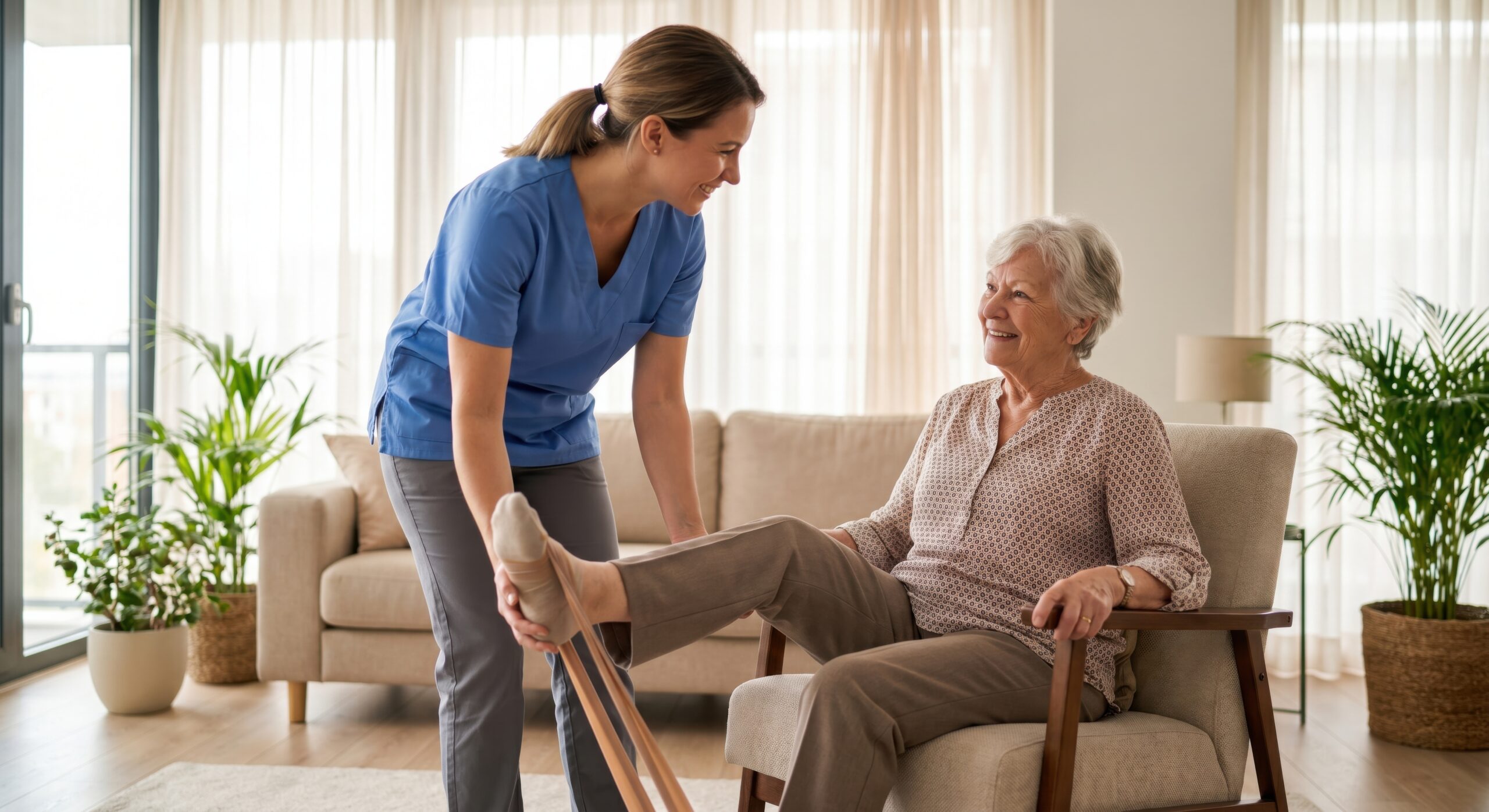
Passive stretching involves using an external force—gravity (straps/bolsters), or a partner—to hold a muscle in a relaxed, lengthened position, improving flexibility without active muscle engagement.
Example – Lying on your back using a strap to gently pull your leg toward your chest/hamstring stretch.
Passive Stretching Key Aspects:
The target muscle remains completely relaxed, allowing for deeper, sustained stretches.
Reduces muscle tension, increases flexibility, and aids in cooldowns.
Assisted Stretching
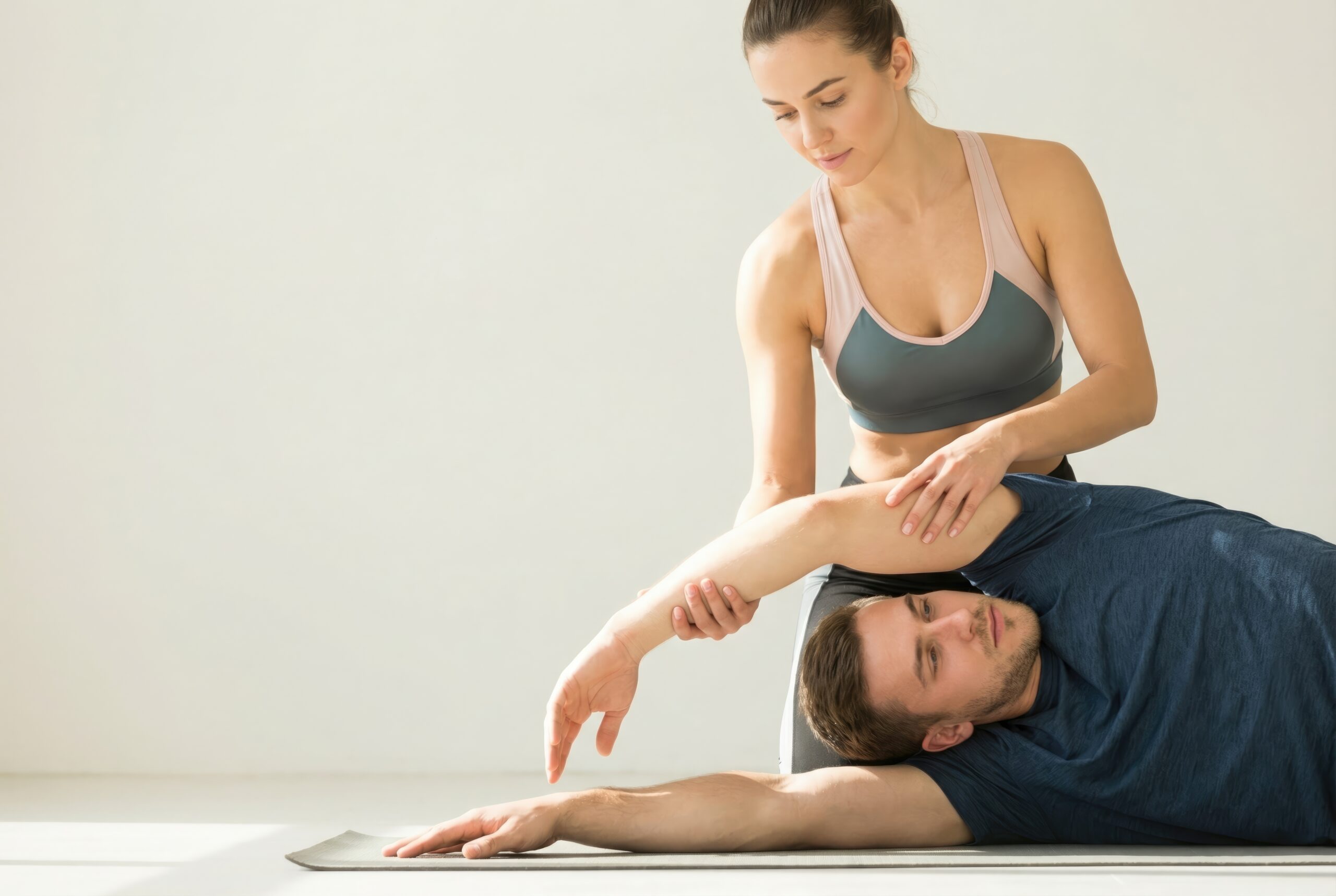
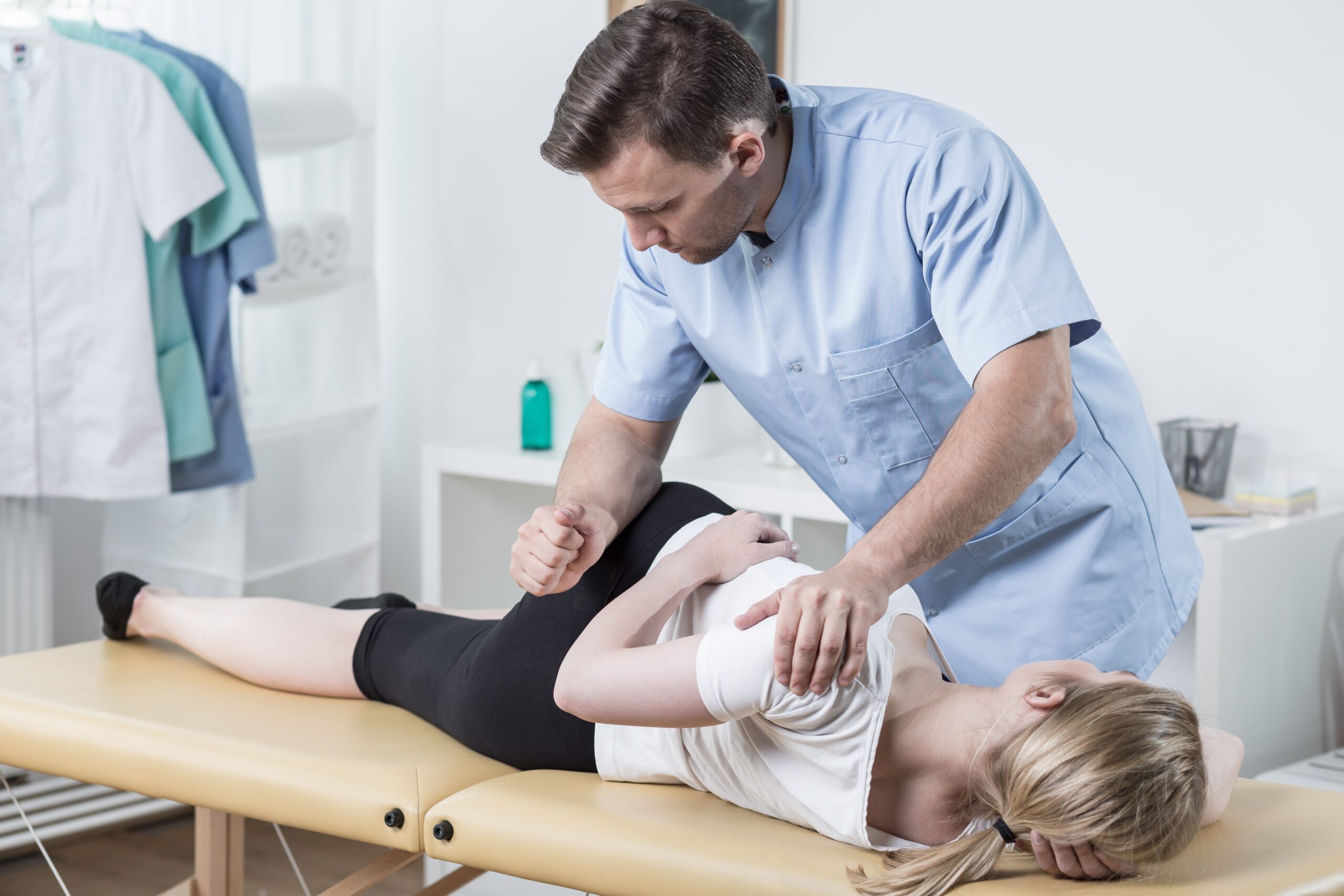
Assisted stretching is a form of passive stretching where a practitioner or partner guides the muscle through a deeper range of motion.
Example – A partner gently pulling your arms back to stretch the chest while you remain upright and relaxed.
Assisted Stretching Key Aspects:
A trainer, therapist, or partner applies pressure to deepen the stretch.
Trained professionals help guide muscles safely to a greater range than one can achieve alone.
PNF Techniques:
Often involves Proprioceptive Neuromuscular Facilitation, where a muscle is contracted and then relaxed into a passive stretch to increase flexibility.
Highly effective for rehabilitation, recovery from injury, and improving athletic performance.
Stretching techniques are particularly beneficial for increasing tissue compliance and reducing muscle stiffness. Both passive and assisted stretching can be incorporated into any massage session.
BOOK A VISIT
Schedule your appointment
No need to pick a date — our team will review your request and contact you to confirm the best available time.